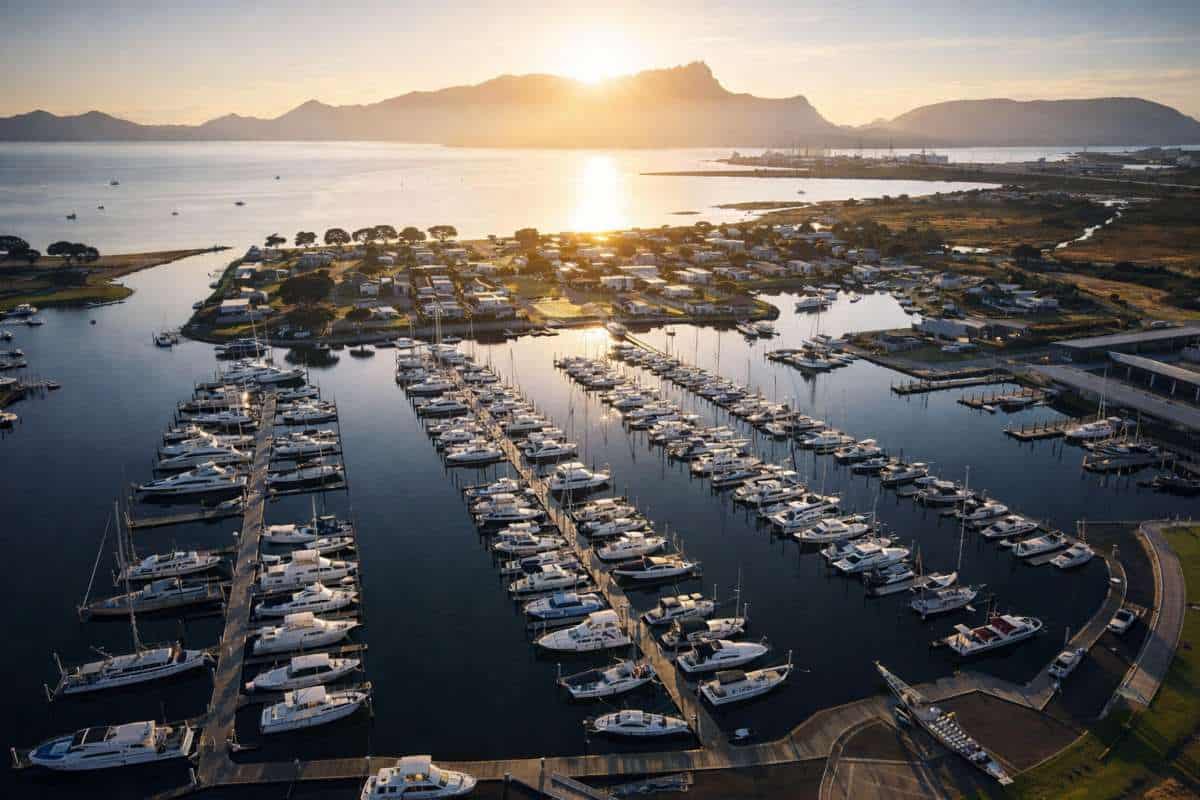
There is a kind of coastal trip that has nothing to do with covering distance. You leave one marina after breakfast, you are tied up in another by mid afternoon, and the nights add up into a run up the coast. Visitor berths are what make it work, and almost none of what you need to know about them is written down anywhere.
Getting a Berth Before You Get There
The Booking That Still Happens by Phone
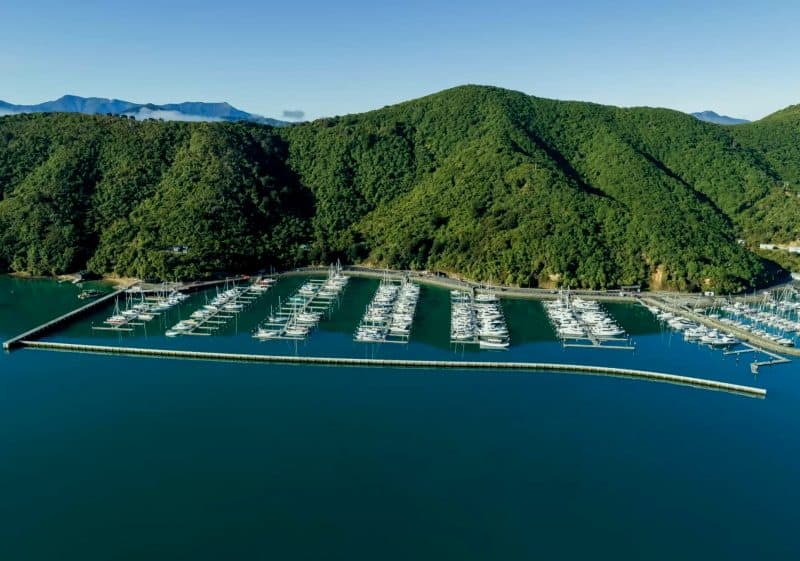
Most visitor berthing in this country still gets sorted the way it did twenty years ago. You ring the office.
Plenty of marinas have a booking form on the website now, and the larger ones will confirm by email inside the hour, but a phone call two days out is still the method that works. Off season you can usually turn up and find something. Between Boxing Day and the end of January that assumption leaves you circling the fairway at dusk while another boat takes the last visitor berth.
Give them your length overall, your beam if you are on a cat, and roughly when you expect to arrive. Then ring again if the weather pushes you a day late, because a berth held for a boat that never turns up is a berth nobody got to use.
What the Radio Actually Gets You
The guides all tell you to call ahead on the working channel as you come in. What happens next depends entirely on where you are.
At marinas running a staffed office through summer you get a berth number, a gate code and someone on the dock to take a line. Elsewhere you will call three times, hear nothing but squelch, and end up nosing into a berth with a green tag on the pile because that is the local convention nobody wrote down.
Have a plan for the silence. Know the office mobile number before you need it, take a berth on spec if you have to, and leave a note with your boat name and your number where the office will find it. It saves the awkward conversation in the morning.
What a Night Alongside Costs
Berthage for visitors is charged by the metre per night almost everywhere, so what you pay depends more on your boat than on the marina. Rates lift over the holidays, and most places will do you better on a week than on a night.
Less predictable is what the rate includes. Worth asking about:
– power, which may be metered, bundled in, or sold on a token
– showers and laundry, and whether either needs a code or a coin
– the pump-out, which some marinas hand you free because they would rather you used it than didn’t
That last one tells you something about how a place thinks. A marina that charges for the pump-out and gives away the wash-down hose has its priorities the wrong way round, and the water in the basin usually shows it.
Arriving as a Guest on Someone Else’s Dock
Look at the Berth Before You Commit to It
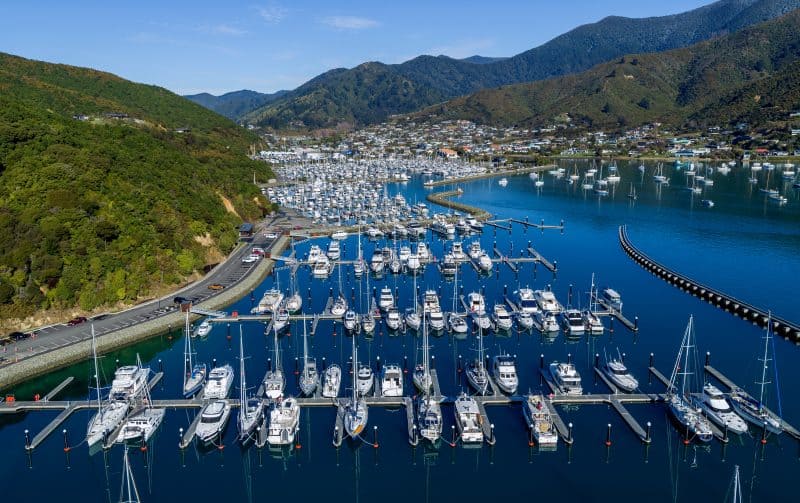
Visitor berths are rarely the good ones. You get what was spare, which often means the outside of a hammerhead in the tide, or a finger berth two thirds the length of your boat with the wind on the beam.
Take the time to look before you commit. Idle off, watch what the mast flags are doing at the far end, and see which way the boats already tied up are lying. On a rising tide somewhere like Whangarei the current through the berths does more to your bow than the breeze does.
Fenders both sides, lines ready both ends, and nobody on the foredeck who has not been told the plan. If someone on the dock offers to take a line, let them. Pride has bent more stanchions than crosswind ever has.
Power, Water and Everything Else You Are Sharing
Once you are alongside, most of the etiquette is about the things everybody is sharing. Shore power leads get run across the walkway and left there, which is fine until a kid on a scooter finds one at speed. Dress it under the finger or tape it down.
Water is the one people get wrong. A visitor berth is not the place to spend forty minutes hosing salt off the topsides, particularly in a dry January when the town is on restrictions and the marina is drawing off the same supply.
Keep detergent out of the basin altogether. Whatever you wash off the deck ends up in the water beside the boat next to you, and marina basins flush slowly.
Sound Carries Further Than You Think
Sound behaves strangely in a marina. Hulls and hard surfaces carry it, and at two in the morning there is nothing else competing with it.
Halyard slap is the standard offence. Tie them off before you go ashore for dinner, because you will sleep through your own and nobody else will. Generators, cockpit conversations that get louder as the evening goes on, and a dinghy left banging against the pontoon all travel further than they feel like they should.
Put the dock cart back where you found it, too. Every marina in the country has exactly one fewer than it needs.
Why Some Marinas Feel Like a Welcome
Whether Anyone Owns the Job
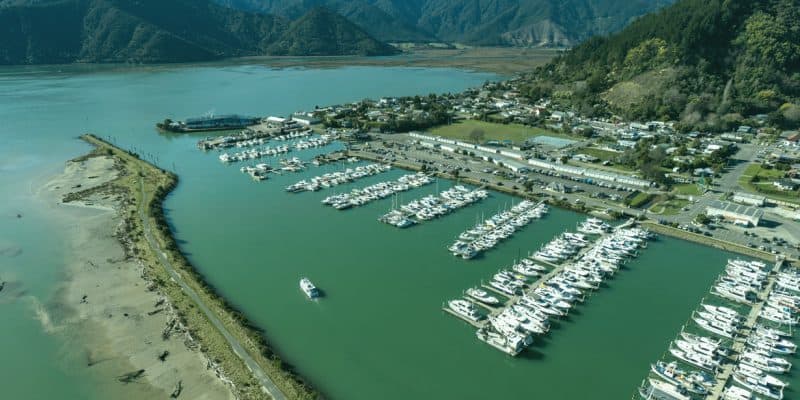
Some marinas make a visiting boat feel expected and some barely register that you arrived, and it has very little to do with the size of the facility.
The pattern is whether anyone owns the job. A marina with a staffed office over summer, a marked visitor pier and someone whose actual role is dealing with transient boats will have you sorted in ten minutes. A marina where visitor berthing is one more thing the maintenance manager handles between jobs will not, and that is not the manager’s fault.
Smaller regional marinas are often the better experience for exactly that reason. When ten visiting boats in a week is a meaningful number, somebody notices you turn up.
The Visitors’ Pier at Six O’Clock
The visitors’ pier at the end of the day is the part that keeps people doing this.
Everyone tied up along it arrived under their own power that afternoon, which is a fair basis for a conversation. You get the weather from the boat that came down the way you are going tomorrow, which bar is workable at what state of tide, where the fuel wharf actually opens on a Sunday, and which of the anchorages further up has filled with charter boats since the guide was printed.
None of that is in the guide. Some of it is wrong. It is still the best information available on the coast, and it arrives with a beer on somebody’s cockpit floor.
Building a Trip Out of the Places People Skip
Once you accept that the marinas are the point rather than the interruptions, the trip plans itself differently. You are not looking for the shortest run north. You are looking for a chain of nights you would actually like to have.
That usually means going to the places most people skip. A small marina at a river town with a decent pub within walking distance beats a large one on the edge of an industrial basin, whatever the facilities list says.
Build in slack for bar crossings and for the days you will not want to go anywhere. And give the hull a proper look between regions, because marine pests travel on visiting boats a great deal more efficiently than they travel on their own.
Every boat on the visitors’ pier is doing the same thing at a slightly different speed, and that is most of the appeal. You get a night of somebody else’s home port, a hot shower, and a conversation you would not have had at anchor. In the morning you take the lines off and it belongs to the next boat.
3 Comments
The bit about calling three times and getting nothing but squelch is painfully accurate. We came into a place up north last Easter, no answer on the radio, no answer on the office phone, ended up on a hammerhead we picked because it looked empty. Turned out to be the right one, but only by luck.
Same experience, though I’d add that a lot of the smaller offices knock off at 4pm sharp and just don’t monitor after that. Worth timing your arrival for the afternoon rather than pushing on for another two hours. We learned that the hard way and spent a night on a berth that had a boat booked into it.
Good point about the pump-out charging. Never thought of it as a signal but it absolutely is.